[Blogger’s note: I was born and raised in America, moved to Canada for love in the early Aughts, and recently relocated again, in my 50s, with my British-born spouse to the southern coast of his homeland. This is an occasional series about learning new tricks in Merry Old England.]
My Two Cents Pence: Currency Exchanges with the Locals
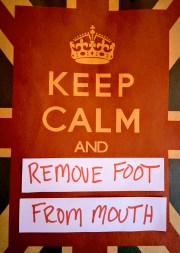 Around the village where we live now, I’m known as “The Dollar Dimwit.”
Okay, nobody has actually called me that to my face. The denizens of Southsea, a picturesque portion of Portsmouth that abuts the English Channel, are far too polite to ridicule me directly—thus far. But I’m sure they’re thinking it as I blunder into their shops and restaurants and blurt, in my all-too-noticeable North American accent, “Is this item on sale for 12 dollars?” Or, “I’ll have the five-dollar lunch special, please.” Or, “The total comes to 3.50 you say? I think I have 50 cents in my pocket.” Continue reading
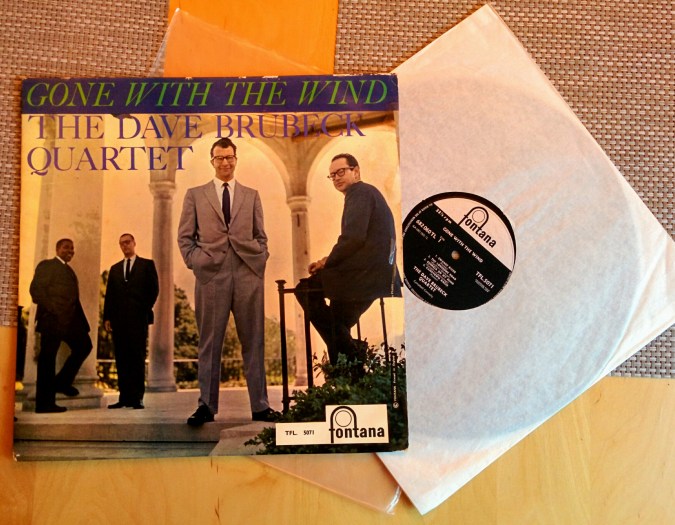 Discovered this gem in a consignment box at a great local coffee shop called
  Growing up in America in the ‘70s, radio was my faithful companion. Be it portable transistor, home stereo, or car dashboard module, I was forever twisting a dial or punching a channel pre-set button, searching for the music I loved. Commercial radio was my connection to the tunes of the day for a long, long time, the first place I heard Blondie, Parliament, Lou Reed, Devo, Prince and countless other musical heroes. But as I got older, that connection frayed.
  Here, at long last, is my pick for the best album of 2016, weeks after that year sputtered ignominiously into oblivion and a full 11 days too late to honour the first anniversary of its maker’s passing. So much for my new year’s resolutions to be more efficient and punctual. Maybe I should start my best of 2017 list tomorrow.
 London-based singer-songwriter Michael Kiwanuka’s 2012 debut album, “Home Again,” was a nice enough collection of laid-back soul tunes, simmering with potential but modest in ambition. No one can accuse his follow-up of being modest. “Love & Hate” makes its grand intentions clear on the epic 10-minute opening cut, “Cold Little Heart.” Hot-shot producer Danger Mouse works with a lush palette here and on several other tracks, layering on the strings and gospel-choir backing vocals and bringing to mind “Hot Buttered Soul”-era Isaac Hayes. (On a couple of songs, such as the mournful “I’ll Never Love,” the versatile Mr. Mouse employs a stripped-down, folky approach reminiscent of ‘70s cult hero Terry Callier.) Kiwanuka seems to be in a far more serious mood this time around. He weighs in on the frustrations of being a “Black Man in a White World” and begs his demons to leave him be on the mesmerizing, slow-build title track. It might be nice to hear a few more upbeat numbers on his next outing, both in tempo and tone– the mood on “Love & Hate” is unequivocally melancholy. But that’s a very minor quibble. With this glorious sophomore effort, Kiwanuka has gone from promising newcomer to one of our most important contemporary artists in a single stride.
 Dear Neko Case, k.d. lang, and Laura Veirs: Please make 10 more albums together. At least. The origin of this astoundingly simpatico collaborative effort may have been casual—out of the blue, lang emailed Case and Veirs to propose recording together and they quickly agreed—but it’s clear that once in the studio, these seasoned solo artists worked diligently to blend their differing styles. The truest vocal collaboration is the opening track, “Atomic Number,” on which each takes a line in the verse. lang’s hot-buttered-rum alto gives way to Veirs’ sweet folkie timbre which cedes to Case’s high, emotive twang before the trio unites in exquisite harmony on the chorus. It’s the aural equivalent of a flower unfolding to full bloom. On the rest of the tracks, one sings lead while her cohorts chime in with pitch-perfect backing vocals. Veirs, previously the least-known and most stylistically constrained of the three, really holds her own, co-writing every song and taking the reins on many, including “Song for Judee,” a lovely, evocative tribute to obscure ‘70s folk artist Judee Sill, who succumbed to drug addiction. “They found you with a needle in your arm,” Veirs sings, “Beloved books strewn around at your feet.” Producer Tucker Martine, Veirs’ spouse, adds charming ‘60s pop touches here and there. As effortlessly gorgeous as this album sounds, Veirs has said that the recording process was difficult and there may not be a follow-up. Let’s hope that’s not true. This formidable threesome is too good to be a one-off. (And that countdown pun merits a score of zero.)
 Like its title, the 1975’s sophomore album is alarmingly long, equal parts amusing and pretentious, and ultimately unforgettable. And like
 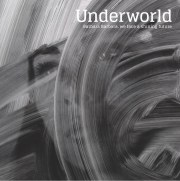 Much like New Order’s 2015 comeback “Music Complete,” which topped my 10-best list last year, Underworld’s latest is an all-too-rare example of an aging group that hasn’t lost its youthful potency. Nine albums in, electronic envelope-pushers Karl Hyde and Rick Smith can still school the current crop of interchangeable EDM newbies on how to make dance music with substance. “Barbara” bats away all doubts with its striking opener, “I Exhale.” Over a throbbing industrial pulse, Hyde spits out spoken-word snippets that evoke overheard bits of conversation on a busy street corner or crowded Tube train. Crackling with urban tension, it’s the highlight of this concise seven-song set. A close second is “Nylon Strung,” the album’s closer. Where Hyde’s delivery is all edgy confrontation on “I Exhale,” here it’s warm and soothing as he chants “Open me up, I want to hold you, laughing” over a percolating techno beat. The tempo ebbs and flows in between these bookends, with the Latin-kissed “Santiago Cuatro” providing a lovely chilled-out interlude, but “Barbara” never loses its swagger. Bonus points for the year’s most intriguing—and touching—album title, taken from an exchange between Hyde’s mum and dad shortly before his father died. If this late-career triumph is any indication, Underworld’s future shines bright indeed.
 Following a succession of releases that showcased a delicate, cerebral sound, as if it were emanating from a bespoke jewel box, Chicago’s own Andrew Bird cranks up the amps on his latest effort. But not to 11, just to about 5: Where once dainty fiddles and whistling dominated, comparatively brawny guitars and drums now propel a few songs. The added instrumental oomph isn’t always welcome. The opening track, “Capsized,” is a generic ‘70s-FM rocker that would sound at home on side two of a Stephen Stills album. Bird also dials back his dense word-nerd lyrics, opting for a more heartfelt, direct approach, although he still can’t resist the occasional egghead verse or two, like this one from the bouncy title cut: “Used to be willfully obtuse/Or is the word abstruse?/Semantics like a noose/Get out your dictionaries.” The new direction seems a tad tentative, giving “Are You Serious” the feel of a transitional work. But all the tinkering pays off with the profoundly moving “Valleys of the Young,” which maps out in vivid detail the perilous peaks and valleys of parenthood. It’s a sprawling, guitar-fuel rock opus worthy of Neil Young himself and it lifts this intriguing-if-flawed record to greatness.
 Previously a purveyor of doleful indie folk—check out her relentlessly bleak 2014 breakthrough “Burn Your Fire for No Witness” for proof—this North Carolina-based singer-songwriter aims for a broader, brighter sound on her fourth album. The results are fairly spectacular. “You’ll Never Be Mine,” an incandescent ode to unrequited love, shimmies to a ‘60s girl group beat. “Give It Up” hits the grunge-pop sweet spot between the Yeah Yeah Yeahs and Nirvana. And “Heart Shaped Face” is a country-tinged weeper that recalls Lucinda Williams at her most poignant. Olsen still occasionally lapses into the Debbie Downer doldrums, especially during the album’s slower second half. (Or side two for you vinyl nerds). And the instrumentation and production are scruffy to a fault. One wonders how someone like Butch Vig might tweak the grunge-y guitar riffs on “Give It Up”— he’s had some success with that after all. But flaws aside, “My Woman” is a damn good, stylistically diverse set that hints at even greater things to come.
 dugoutdiscs