[Blogger’s note: I was born and raised in America, moved to Canada for love in the early 2000s, and recently relocated again, in my 50s, with my British-born spouse to the southern coast of his homeland. This is an occasional series about learning new tricks in Merry Old England.]
Dinner, Supper or Tea: What Say Ye? Hashing Out the Terms for British Daily Meals

My spouse and I are about to celebrate the third anniversary of our move to the UK, and every once in a while, when I’m feeling cocky, I’ll think I’m ready to graduate from an entry-level understanding of British life to at least an intermediate status. Then, inevitably, I’ll be confronted with a humbling reminder that I still have lorry-loads to learn.
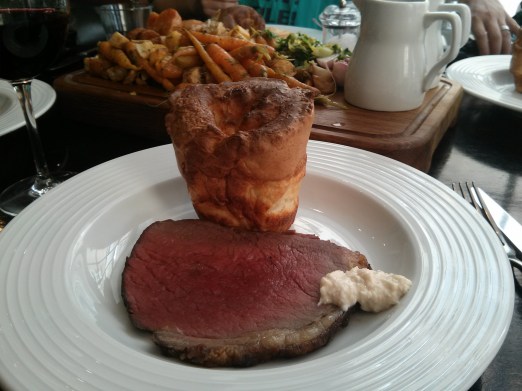
Take the confounding conundrum of what to call daily meals in Britain. Stateside, the terms are easily digestible. Virtually everyone in North America calls the first meal of the day “breakfast” and the midday meal “lunch.” For the evening’s repast, the folksy “supper” lingers in certain areas – I can recall my dear old southern grandmother beckoning us kids to the supper table – but “dinner” dominates in our pop culture-steeped minds and hearts. After work, we may fill our bellies with a Swanson’s TV Dinner or a KFC Dinner Box or, in Canada, a Kraft Dinner. (Mac ‘n’ cheese to the rest of us.) A few years back, US advertisers force-fed us the slogan “Beef. It’s What’s for Dinner,” much to the horror of vegetarians and contraction-phobes across the country. If we invite that special someone over for dinner and a movie, perhaps we’ll watch the classic Guess Who’s Coming to Dinner or the somewhat less lauded Dinner for Schmucks. And if we find ourselves lucky, in love or otherwise, we might exclaim, “Winner, winner, chicken dinner!” Though we shouldn’t get too attached to that catchphrase du jour as it’s sure to join “Whassup!” and “Gag me with a spoon” on the fad compost heap any day now. Continue reading

 With the
 It was the afternoon of Prince Harry’s and Meghan Markle’s nuptials and royal wedding-obsessed folks all over Britain, indeed the world, were bunched around TV screens, hankies at the ready, to watch the blessed event. But not me and my partner. We had skipped the live airing to hunt for discounted summer attire in Portsmouth’s scruffy city centre shopping district. (Though of course we caught the two-hour BBC recap later that evening. We’re not monsters.) Well into our leisurely stroll from our flat to the shops, we overheard a cheerful male voice approaching from behind. “Hello, Nan, it’s your favourite grandson!” the voice crooned in that pleasantly sing-song way in which many Brits speak. Being a world-class sleuth, I quickly deduced that he was talking to his grandmother via mobile phone. “What’s that, Nan?” the voice continued. “No, I’m not watching it. Don’t really have any interest. You? Ah, lovely. I’m sure it is a beautiful dress. Well, I was just calling to wish Auntie Gail a happy birthday. Is she around? Lovely! Ta, Nan!”
  dugoutdiscs